Harper Richter · 19 November 2026
Tracing Genetic Clues from Crop Resilience Trials to Forest Bloom Adjustments Under Climate Pressure
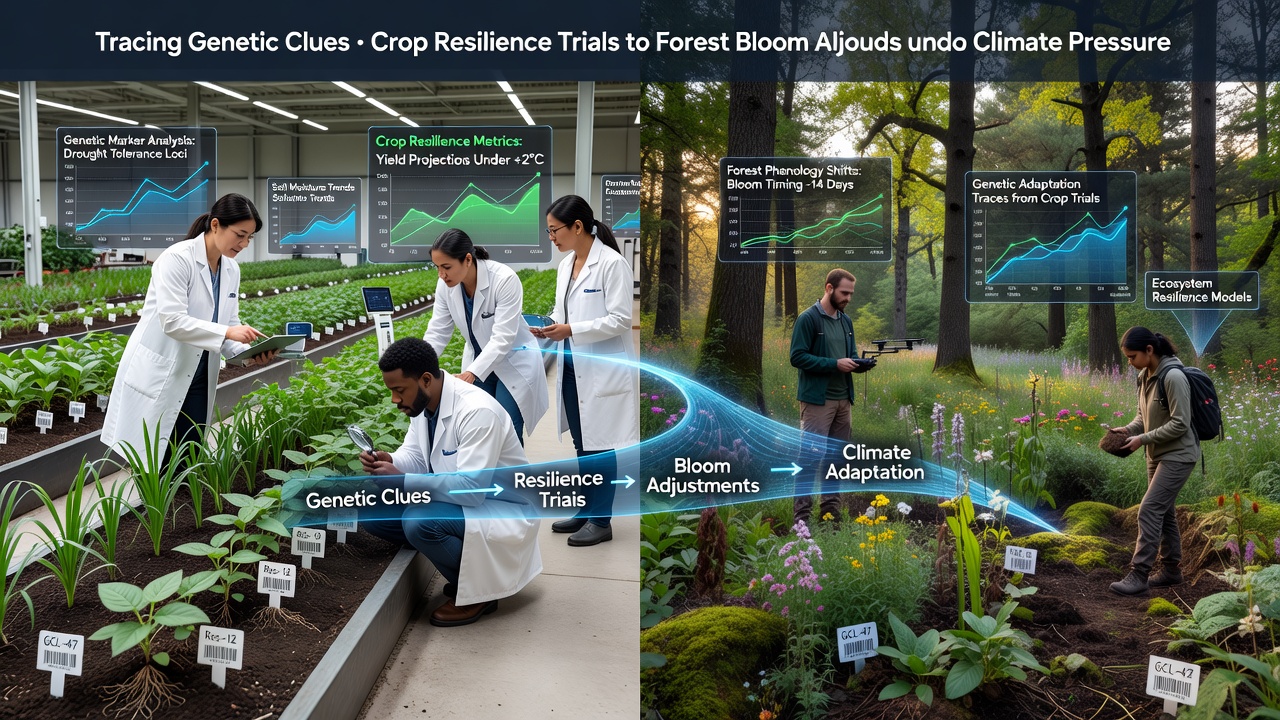
Genetic research now links crop resilience trials directly to observations of forest bloom timing shifts driven by changing climate patterns, and scientists trace specific markers across these systems to understand adaptation mechanisms. Field data from multiple continents show how drought-tolerant gene variants identified in staple crops appear in related wild species that influence forest canopy responses during spring warming events.
Connecting Crop Trials to Forest Phenology
Studies conducted through 2025 and into November 2026 reveal overlapping genetic pathways where crops selected for heat and water stress tolerance share sequence variations with tree populations that adjust flowering periods earlier or later based on temperature anomalies. Researchers map these clues using genome-wide association studies that compare cultivated lines against natural stands, and the approach uncovers regulatory genes controlling both root architecture in grains and bud burst in deciduous species under elevated carbon dioxide levels.
One project at an agricultural research station in the American Midwest cross-referenced resilience markers from maize trials with genomic data from nearby oak forests, and results indicated that alleles linked to deeper rooting also correlated with delayed leaf-out during prolonged dry spells. Similar patterns emerged in European beech populations monitored by teams from the EU Joint Research Centre, where climate pressure accelerated bloom adjustments in stands with lower frequencies of those same alleles.
Genomic Methods and Data Integration
Scientists employ CRISPR-based validation alongside long-term monitoring plots to confirm causal relationships, and they integrate satellite-derived vegetation indices with ground-level genetic sampling. This combination allows tracking of bloom adjustments across large forested regions while pinpointing variants that confer resilience, and data from Australian eucalyptus trials further support the transferability of findings because those species display parallel responses to altered rainfall regimes.
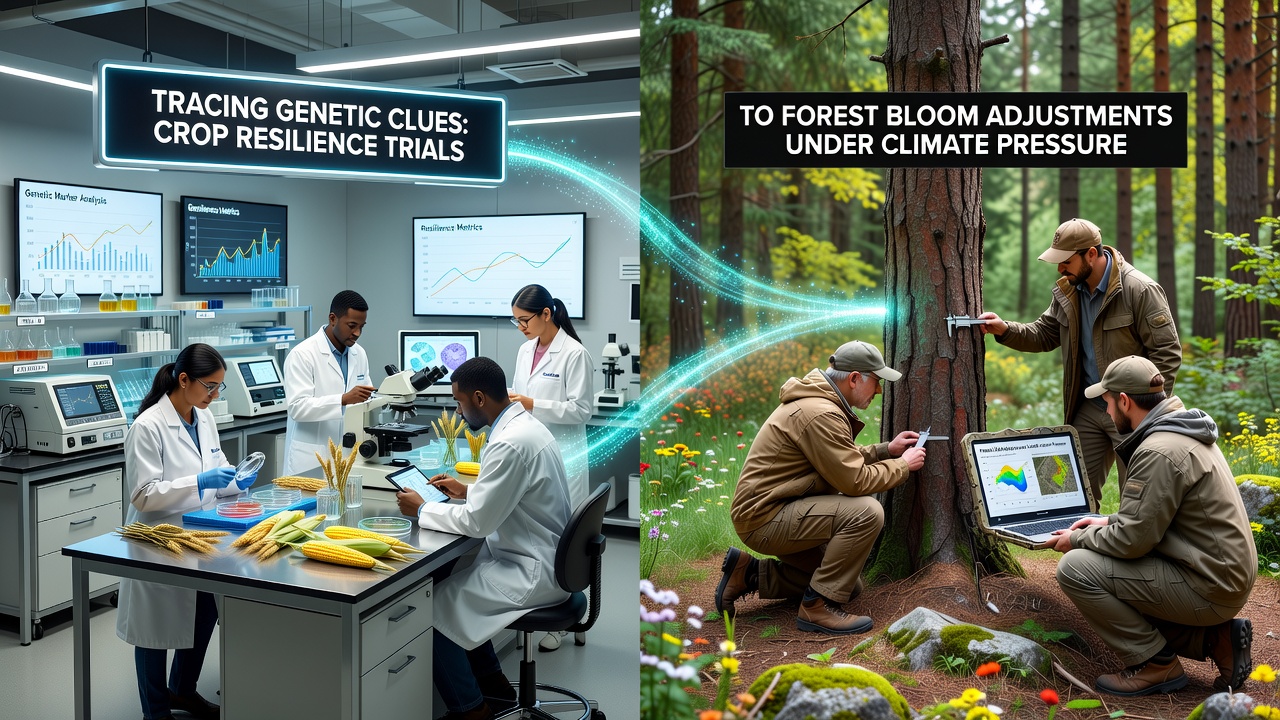
According to reports from USDA climate research programs, crop trial networks have catalogued over 12,000 genetic variants associated with yield stability under variable conditions since 2020, and several of these variants show conservation in forest tree genomes sequenced through international collaborations. Canadian forestry agencies have contributed parallel datasets from boreal stands where earlier snowmelt coincides with shifted flowering in understory plants, and cross-analysis identifies shared transcription factors that regulate both grain filling and floral meristem development.
Observed Adjustments in Forest Systems
Forest bloom adjustments documented through phenological networks demonstrate that many temperate species now initiate flowering 5 to 12 days earlier per decade of warming, and genetic surveys link faster adjustments to higher frequencies of resilience alleles originally characterized in crop experiments. In regions experiencing increased summer drought frequency, stands with crop-derived marker profiles maintain more stable reproductive timing, whereas populations lacking those sequences exhibit greater variability and occasional reproductive failure.
Researchers note that microbial interactions in the rhizosphere also play a mediating role, because beneficial fungi enriched in resilient crop varieties promote similar associations in tree seedlings that buffer against bloom disruption. Trials in variable greenhouse conditions have isolated these effects, and field transplantation experiments confirm that inoculated forest plots display bloom patterns closer to those predicted from crop genetic models.
Implications for Broader Ecosystems
Integration of crop and forest datasets supports predictive modeling of future vegetation responses, and agencies such as Australia's CSIRO use these frameworks to forecast regional shifts in woodland productivity. The approach reveals that conserving genetic diversity identified through agricultural breeding programs can inform reforestation strategies aimed at maintaining bloom synchrony with pollinator cycles under continued climate pressure.
Conclusion
Tracing genetic clues from crop resilience trials therefore provides a practical framework for anticipating and managing forest bloom adjustments, and ongoing monitoring through November 2026 continues to refine these connections across global study sites. Data from multiple research networks demonstrate that shared genomic elements underlie adaptation in both agricultural and natural systems, enabling more targeted conservation and breeding efforts as climate conditions evolve.