
Kai Schmidt · 22 October 2026
How Soil Microbes Shape Flowering Responses in Variable Greenhouse Conditions
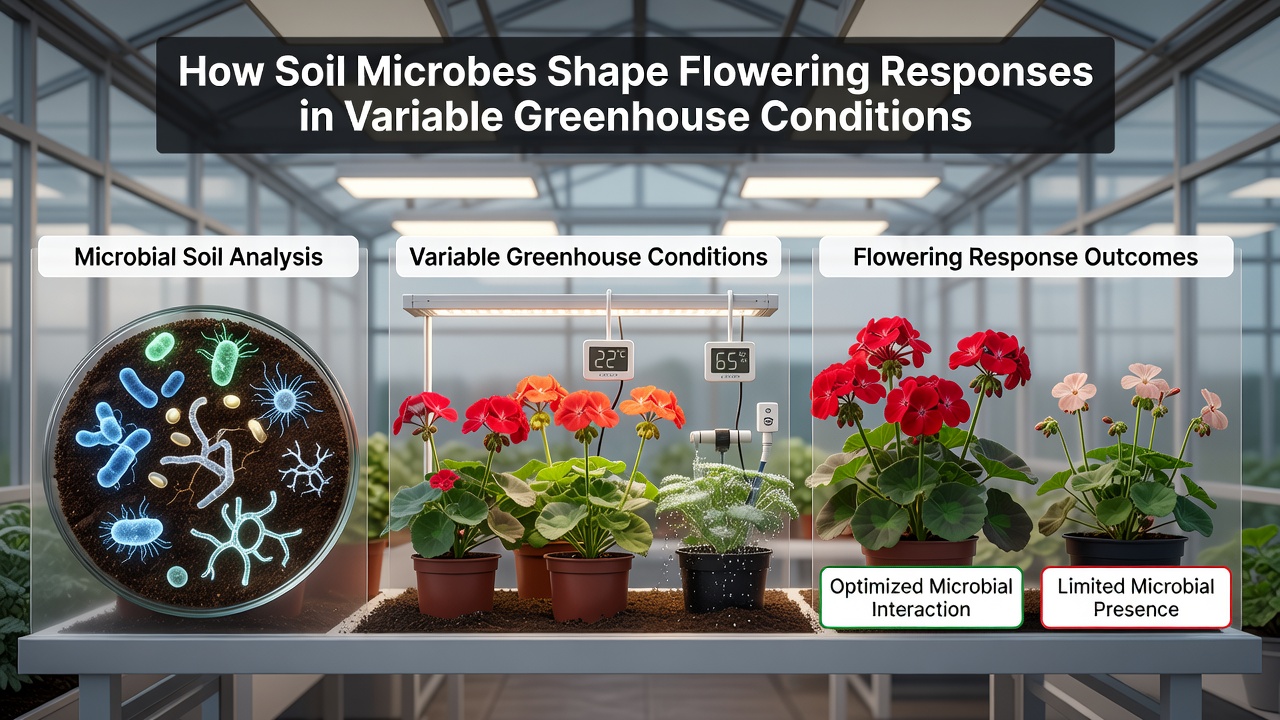
Soil microbes interact with plant roots in ways that directly influence when and how plants produce flowers, especially inside greenhouses where temperature, humidity, and light levels shift frequently throughout the day. These microscopic communities alter nutrient availability, produce signaling compounds, and modify root architecture, all of which feed into the timing of reproductive development. Research indicates that bacterial and fungal populations respond quickly to changes in moisture and substrate composition, creating feedback loops that either accelerate or delay blooming cycles depending on the dominant species present.
Microbial Communities and Root Signaling Pathways
Beneficial bacteria such as Pseudomonas and Bacillus strains release phytohormones including auxins and cytokinins that travel through the plant vascular system and affect meristem activity in shoot tips. Studies from agricultural research stations show these compounds can shorten the vegetative phase by several days when nitrogen levels remain stable, whereas excess ethylene-producing microbes tend to extend that phase under high humidity. Fungal partners, particularly arbuscular mycorrhizal species, extend the root surface area and improve phosphorus uptake, which researchers link to earlier floral induction in crops like tomatoes and petunias grown in soilless mixes.
Greenhouse operators adjust irrigation schedules and substrate blends precisely because small shifts in oxygen availability change which microbial groups dominate the rhizosphere. Data collected across multiple facilities reveal that reduced oxygen in waterlogged zones favors anaerobic bacteria that suppress flowering signals, while well-aerated zones support communities that promote earlier bud formation. Those patterns hold across both commercial and experimental settings.
Responses to Temperature and Humidity Fluctuations
Daily temperature swings of 8 to 12 degrees Celsius inside greenhouses alter microbial metabolism rates and therefore the production of volatile organic compounds that plants perceive as stress cues. When daytime heat spikes coincide with high relative humidity, certain Actinobacteria populations increase and release compounds that slow the transition to reproductive growth. In contrast, cooler night temperatures combined with drier air often support communities rich in plant-growth-promoting rhizobacteria that maintain steady flowering schedules.
October 2026 records from several European research greenhouses documented how controlled reductions in nighttime humidity shifted microbial diversity indexes and correlated with a 4-to-6-day advance in first-flower dates for bedding plant varieties. The same datasets indicated that maintaining substrate temperatures above 22 degrees Celsius consistently favored mycorrhizal colonization, which in turn stabilized flowering responses even when daytime ventilation rates changed.
Nutrient Cycling and Flowering Timing
Microbial mineralization of organic nitrogen and phosphorus supplies the raw materials plants require for flower bud initiation, yet the speed of these processes depends on substrate temperature and aeration. When microbial respiration rates rise with warmer root zones, nitrate becomes available more rapidly and supports earlier expression of flowering genes. Conversely, cooler or compacted substrates slow mineralization and delay bloom by limiting those same nutrients.
Greenhouse trials conducted by teams at Wageningen University and Research have tracked these dynamics across multiple seasons, showing that inoculating substrates with specific consortia of nitrogen-fixing and phosphate-solubilizing microbes can offset delays caused by lower light integrals. The results appear in peer-reviewed reports that growers reference when designing fertigation programs for variable winter conditions.
Practical Adjustments in Commercial Settings
Many commercial operations now monitor microbial activity through periodic substrate sampling rather than relying solely on plant tissue tests. This approach allows managers to anticipate shifts in flowering windows before visible symptoms appear. For instance, a rise in certain saprophytic fungi often precedes delayed blooming in high-humidity zones, prompting adjustments in airflow or substrate amendments. Australian horticultural research groups have published protocols that integrate these microbial indicators with climate-control algorithms, enabling predictive management rather than reactive interventions.
Those protocols emphasize maintaining diverse microbial communities through careful choice of organic amendments and avoidance of broad-spectrum fumigants. Evidence from long-term monitoring shows that diverse communities buffer flowering responses against sudden changes in CO2 enrichment levels or supplemental lighting schedules.
Conclusion
Soil microbes function as active regulators of flowering timing inside greenhouses by modulating hormone levels, nutrient release, and stress signaling under fluctuating environmental conditions. Ongoing measurements in October 2026 and beyond continue to refine understanding of which management practices best support stable microbial communities that align bloom periods with market demands. Growers who track both physical parameters and biological indicators gain clearer insight into the mechanisms driving plant responses across variable production environments.